Electronics
Flight Electronics & PCB Technician
Build and test the boards that fly: sensor nodes, hub wiring and altimeter stacks.
PreferredEETEENECTEMA
3–6 hrs/week · volunteer
Volunteer with us · Fall 2026
Every role here is unpaid and voluntary, run by students for students. Pick a role, read what you'd actually do, and apply with your résumé. You don't need to have built a rocket. Here's the deal:
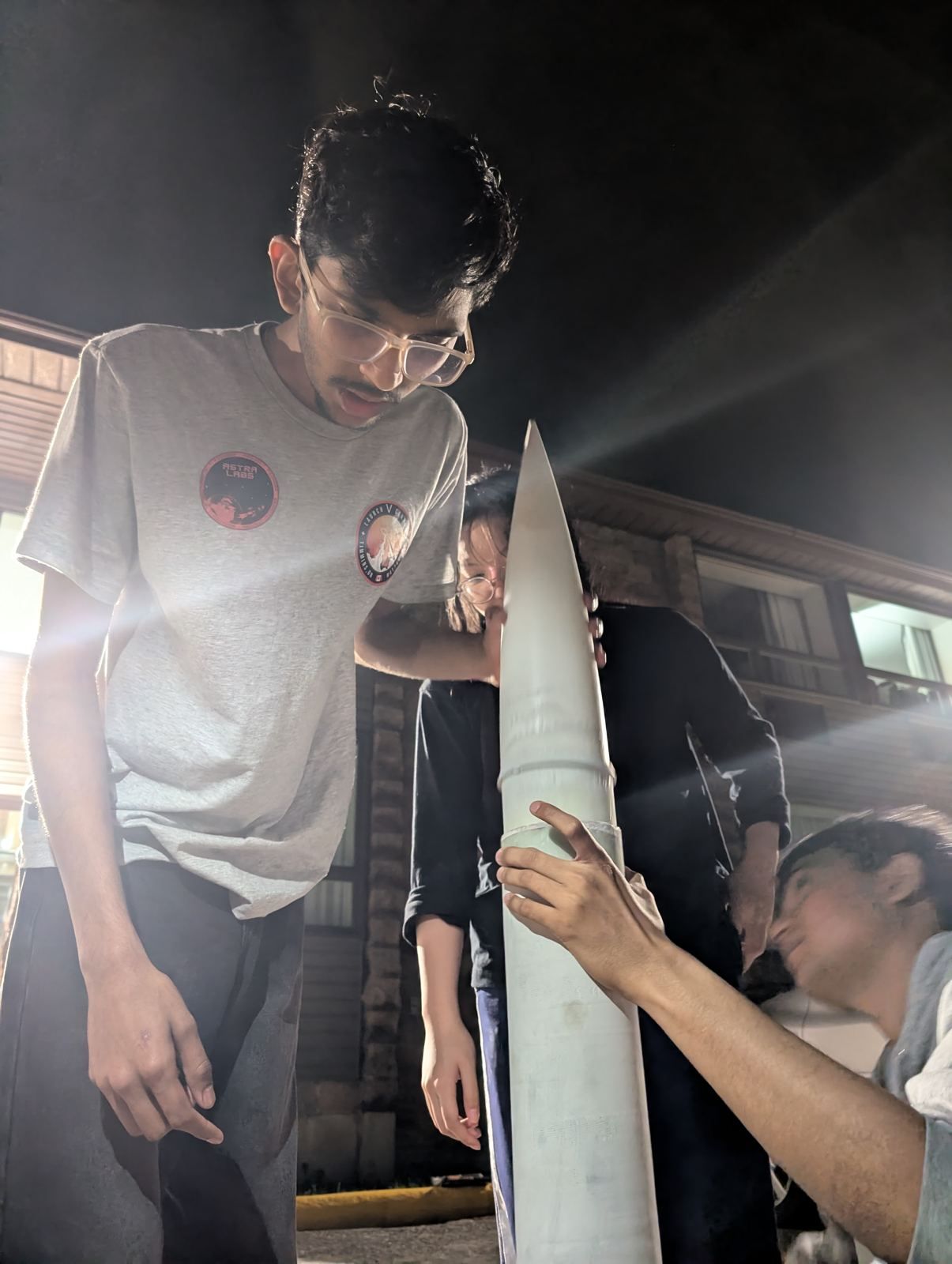
Electronics
Build and test the boards that fly: sensor nodes, hub wiring and altimeter stacks.
Electronics
Write code for the ESP32-C6 nodes and the STM32 hub that logs and forwards flight data.
Electronics
Build the software that receives, stores and plots telemetry on launch day.
Mechanical
Model the payload tube, bulkheads and mounts, then print test fits so every part is checked before it is cut or laid up.
Mechanical
Roll and finish fibreglass tubes and bulkheads for the new airframe.
Mechanical
Fit everything together: threaded rods, U-bolts, bulkheads and the electronics bay.
Admin
Keep the schedule and design review documents moving so nothing is missed before the flight.
Admin
Maintain safety checklists, test logs and approvals so every test has a paper trail.
Marketing
Tell the build story on Instagram and LinkedIn while it is happening.
Marketing
Capture build days and launch day, and keep the website's photos and copy current.
Business
Find and contact companies and programs that can fund parts, travel and launch fees.
Business
Source parts and get quotes for CNC-cut bulkheads and other outsourced work.
Handbook
Team 06, Seneca Polytechnic. We build and fly high-power rockets and the payloads inside them. Our first rocket, Pioneer, went to Launch Canada 2026 and did not pass pre-launch inspection, so it has not flown. We are repairing it and designing a second rocket for 2027.
Our payload work is a small-scale rideshare: many small ESP32 sensor nodes, each logging data from onboard sensors and sending it over a CAN bus to a central hub, which forwards it to the ground station and stores it on board.
| When | What |
|---|---|
| This semester | Interviews and onboarding |
| November 30, 2026 | Launch Canada Initial Design Review (IDR) for the 2027 rocket |
| January 31, 2027 | Preliminary Design Review (PDR) |
| Winter 2027 | Pioneer repair and refly, once a launch site is confirmed |
| Mid-August 2027 | Launch Canada 2027 (date estimated) |
Volunteers join one of five areas, and can help a second one once they are settled.
Volunteering here does not promise a job or co-op placement.
Black powder and ejection charges are handled only by a licensed mentor. Students do the calculations and design reviews, and never prepare or fire charges on their own. All ground tests happen under a mentor's supervision.
01
Come to a Friday meeting
5–7 pm in the SSF clubs room. Just show up and say hi.
02
Pick a role
Filter by area and read what you'd do. You can switch later.
03
Apply when roles open
Roles are posted above and the handbook explains the rest. We reply to your Seneca email within 5 days.
04
First task, first week
You'll be paired with a subteam lead right away.
Here's what you'd actually be doing this year. You can switch later, and plenty of people help on two.