Payload · 2026 · Concept test
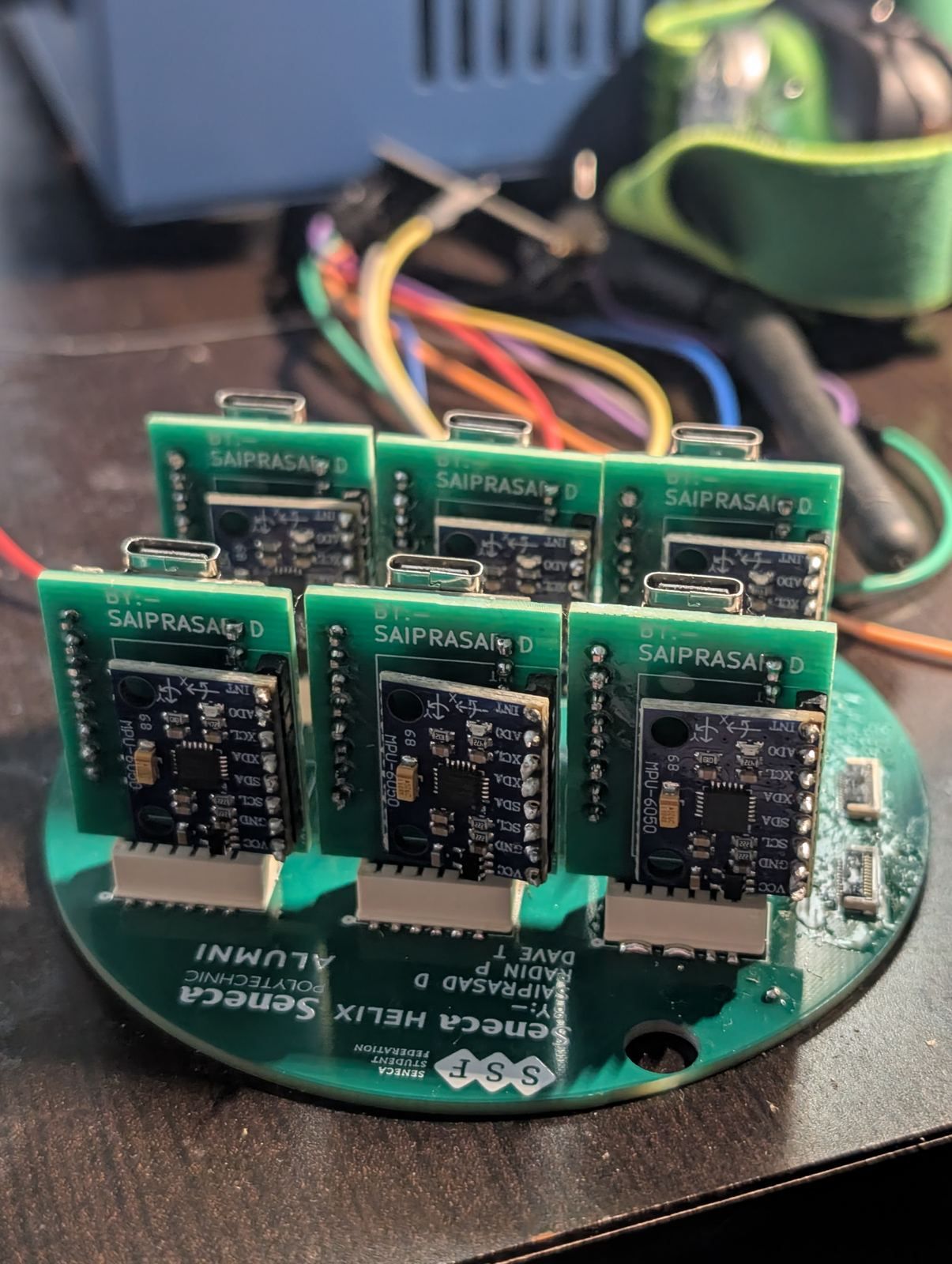
Picosat concept test.
Our first try at a sensor swarm, built to ride inside Pioneer. It never flew.
What it was
A small group on the team built it to see whether the swarm idea could work at all. It wasn't a finished flight payload, and it wasn't the student workshop build.
The question it asked: if you fly 24 identical motion sensors on the same rocket, how much do they disagree?
- Nodes
- 24
- Each node
- ESP32-C6 with an MPU-6050 motion sensor
- Network
- CAN bus to a central hub
- Radio
- 915 MHz to the ground
- Flights
- None
What happened
We took Pioneer and the payload to Launch Canada 2026 in Timmins in August. The rocket didn't pass pre-launch inspection: there were faults in the payload and in the rocket's assembly. So neither flew.
It wasn't the ending we wanted, but it showed us exactly what to fix before trying again.
What's different in Hivemind